The Scholar’s Evolution: How Hybrid Learning and Cross-Cultural Scholarships Are Redefining the DNA of Global STEM Leadership
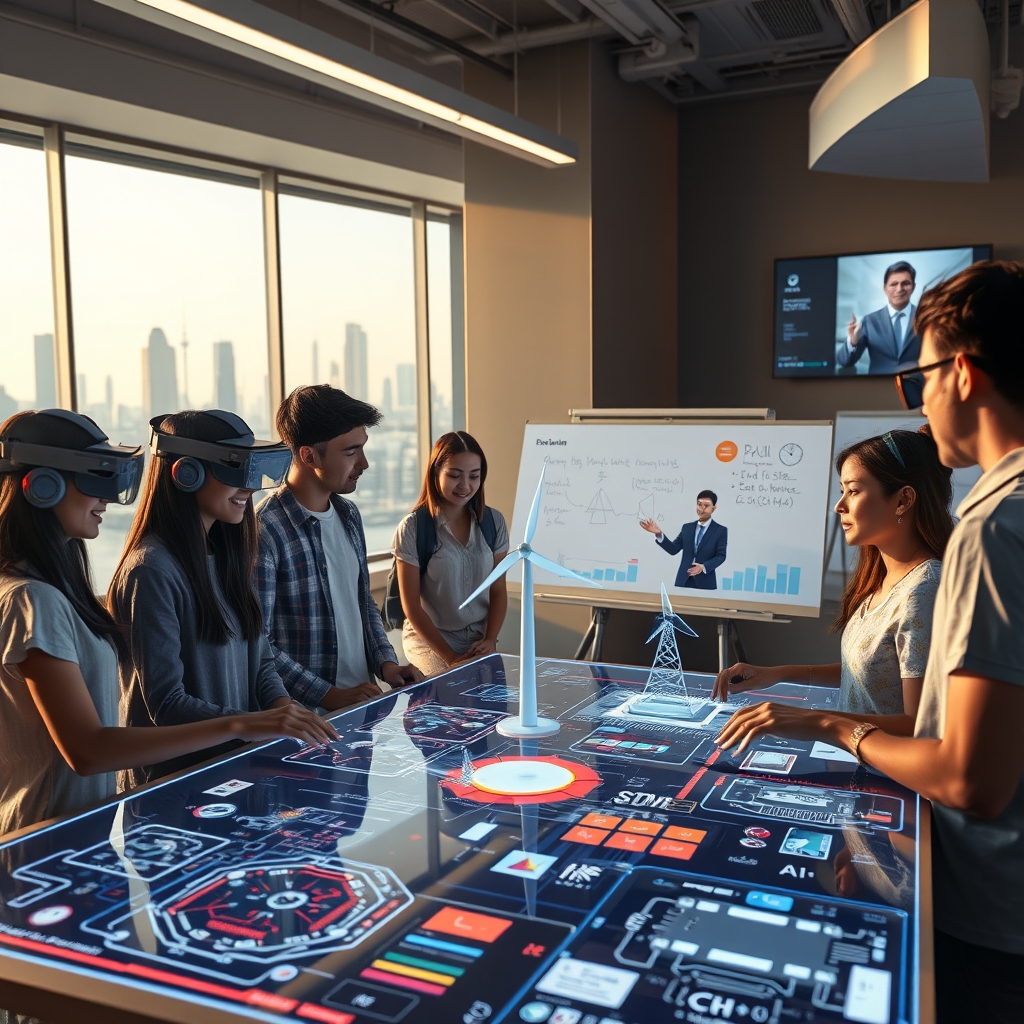
In an era where the boundaries of education are no longer confined by geography, the fusion of hybrid learning formats and cross-cultural scholarships is revolutionizing how the next generation of STEM leaders is forged. The traditional classroom, once a static space of chalkboards and textbooks, has metamorphosed into a dynamic ecosystem where virtual collaboration and in-person immersion coexist. This evolution is not merely a response to technological advancement but a deliberate reimagining of how knowledge is acquired, shared, and applied across continents. At the heart of this transformation lies the promise of accessibility—where a student in Nairobi can engage in a real-time research project with peers in Tokyo, all while benefiting from a fully funded scholarship that removes financial barriers to participation.
The Symbiosis of Hybrid Learning and Academic Mobility
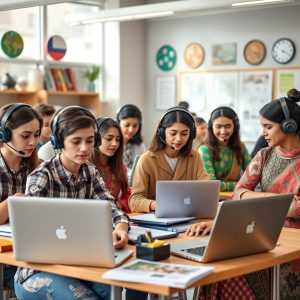
Hybrid learning formats have emerged as the linchpin of modern academic mobility, offering a flexible framework that accommodates diverse learning styles and life circumstances. Unlike traditional models that demand physical presence, hybrid programs blend synchronous and asynchronous learning, enabling students to tailor their educational journeys to their unique needs. For instance, a student enrolled in a global undergraduate exchange program might attend virtual lectures from a professor in Berlin while completing lab work at a local university. This duality not only enhances academic rigor but also fosters cross-cultural communication, as students navigate time zones, languages, and collaborative tools to achieve shared goals.
The synergy between hybrid learning and academic mobility is further amplified by international scholarships, which act as catalysts for participation. Fully funded scholarships, such as those offered by the Global Undergraduate Exchange Program or merit-based initiatives like the Fulbright Scholarship, democratize access to these opportunities. They ensure that talent, rather than financial capacity, dictates who can engage in transformative educational experiences. The result is a more inclusive global STEM workforce, where diverse perspectives converge to tackle complex challenges, from climate change to healthcare innovation.
The Role of Virtual Student Exchange in Cultivating Global Citizens
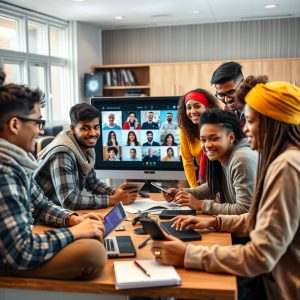
Virtual student exchange programs have redefined the concept of cultural immersion, proving that physical travel is not the sole pathway to cross-cultural understanding. Through platforms that facilitate real-time discussions, collaborative projects, and even virtual internships, students gain exposure to global perspectives without leaving their home countries. For example, a student in Mumbai might participate in a virtual hackathon with peers in São Paulo, exchanging ideas on sustainable urban development while honing their technical and communication skills. These experiences are not merely academic exercises; they are incubators for empathy, adaptability, and global citizenship—qualities that are indispensable in an interconnected world.
Moreover, virtual exchanges often serve as gateways to in-person opportunities. Many programs offer hybrid models where initial virtual collaboration is followed by short-term study abroad experiences. This phased approach allows students to build relationships and cultural fluency before committing to longer-term mobility, reducing the intimidation factor that often accompanies international education. It also aligns with the growing emphasis on educational sustainability, as virtual components minimize the carbon footprint associated with traditional study abroad programs.
Financial Aid Packages: The Backbone of Inclusive Global Education
While hybrid learning and virtual exchanges expand the horizons of academic mobility, financial aid packages remain the backbone of inclusive global education. Higher education grants and scholarships are not just financial lifelines; they are strategic investments in the future of global innovation. Programs like the Global STEM Changemakers Initiative or postgraduate funding opportunities such as the Chevening Scholarship provide more than just tuition coverage—they offer mentorship, networking, and career development opportunities that extend far beyond graduation.
The impact of these financial aid packages is particularly pronounced in STEM fields, where the demand for diverse talent is at an all-time high. By removing financial barriers, scholarships enable students from underrepresented regions to contribute their unique perspectives to global research and development. For instance, a student from a low-income background in Sub-Saharan Africa might leverage a fully funded scholarship to pursue a degree in renewable energy engineering, ultimately returning to their community with the skills to drive local innovation. This cyclical benefit underscores the transformative power of financial aid in shaping not just individual careers, but entire industries and economies.
Blended Education Programs: The Future of Career-Ready STEM Leadership
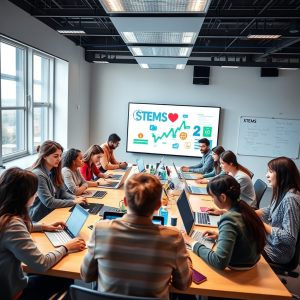
Blended education programs represent the next frontier in preparing students for the demands of a globalized workforce. By integrating online coursework with hands-on, experiential learning, these programs equip students with both technical expertise and soft skills such as cross-cultural communication, teamwork, and problem-solving. For example, a blended program in data science might combine virtual lectures on machine learning algorithms with in-person workshops where students apply their knowledge to real-world datasets from multinational corporations. This dual approach ensures that graduates are not only proficient in their fields but also adept at navigating the complexities of a multicultural professional landscape.
The career development opportunities embedded in blended programs are further enhanced by partnerships with industry leaders. Many programs collaborate with global tech companies, research institutions, and NGOs to offer internships, capstone projects, and networking events. These partnerships bridge the gap between academia and industry, providing students with tangible pathways to employment. For instance, a student in a blended engineering program might secure an internship with a renewable energy firm in Germany, gaining firsthand experience in sustainable technology while building a professional network that spans continents.
The Ripple Effect of Cross-Cultural Collaboration
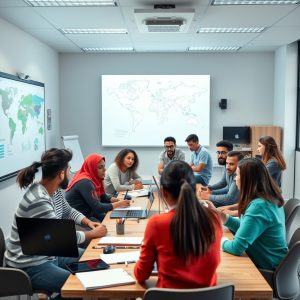
The benefits of hybrid learning and cross-cultural scholarships extend far beyond individual achievement. They create a ripple effect that transforms institutions, industries, and societies. When students from diverse backgrounds collaborate, they bring unique problem-solving approaches to the table, fostering innovation that is both inclusive and impactful. For example, a team of students from India, Brazil, and the United States might develop a low-cost water purification system that addresses a critical need in rural communities. This kind of collaborative innovation is the hallmark of a global STEM workforce that is equipped to tackle the world’s most pressing challenges.
Institutions, too, benefit from this exchange of ideas. Universities that embrace hybrid learning and cross-cultural scholarships become hubs of intellectual diversity, attracting top talent from around the world. This diversity enriches campus culture, fosters interdisciplinary research, and positions institutions as leaders in global education. Moreover, the partnerships formed through these programs often lead to long-term collaborations between universities, governments, and private sector organizations, creating a sustainable ecosystem of knowledge sharing and innovation.
As the landscape of global education continues to evolve, the integration of hybrid learning and cross-cultural scholarships stands as a testament to the power of innovation in breaking down barriers. These models are not just reshaping how education is delivered; they are redefining who has access to it and what they can achieve with it. The future of STEM leadership is no longer confined to the privileged few but is being democratized for a new generation of changemakers. In this dynamic ecosystem, every student has the potential to become a global citizen, a cultural ambassador, and a catalyst for change—regardless of where they begin their journey. The tools are at their fingertips; the world is their classroom, and the possibilities are limitless.