The Future of Cross-Cultural Education: How Hybrid Learning and International Scholarships Are Redefining Academic Mobility for Postgraduate Students

In an era where borders are increasingly blurred by digital innovation, the landscape of higher education is undergoing a profound transformation. The fusion of hybrid learning formats and international scholarships is not just reshaping how students engage with academic content but also redefining the very essence of academic mobility. For postgraduate students, this evolution presents unprecedented opportunities to transcend geographical limitations while immersing themselves in diverse cultural and intellectual environments.
The Rise of Hybrid Learning in Postgraduate Education
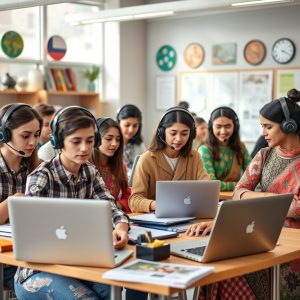
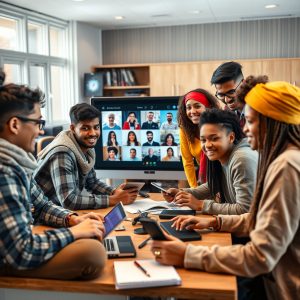
Hybrid learning, a blend of in-person and virtual education, has emerged as a cornerstone of modern academic experiences. This format offers postgraduate students the flexibility to balance rigorous coursework with personal and professional commitments, a necessity in today’s fast-paced world. Universities worldwide are adopting hybrid models to accommodate the growing demand for accessible, high-quality education. For instance, a student pursuing a master’s degree in environmental science can attend lectures on campus while collaborating with peers from different continents through virtual labs and discussion forums.
The benefits of hybrid learning extend beyond convenience. It fosters a dynamic learning environment where students can engage with cutting-edge research, participate in global seminars, and access resources that might otherwise be unavailable in their home countries. This model also encourages the development of digital literacy skills, which are increasingly vital in both academic and professional settings. As hybrid learning continues to evolve, it is breaking down the barriers that once limited postgraduate education to those who could afford to relocate or take extended leaves from work.
The Role of International Scholarships in Expanding Access
While hybrid learning democratizes access to education, international scholarships play a pivotal role in ensuring that financial constraints do not hinder academic aspirations. Fully funded scholarships and higher education grants are empowering students from diverse backgrounds to pursue postgraduate studies abroad, whether through physical mobility or virtual exchange programs. Organizations like the Fulbright Program, Chevening Scholarships, and the Erasmus Mundus Joint Master Degrees are leading the charge, offering merit-based scholarships that cover tuition, living expenses, and even travel costs.
These scholarships are not merely financial aids; they are gateways to cross-cultural communication and professional growth. Recipients gain exposure to new perspectives, build global networks, and develop skills that are highly valued in today’s interconnected job market. For example, a student from Nigeria awarded a scholarship to study data science in Germany can leverage hybrid learning to complete part of their degree remotely, reducing the financial burden while still benefiting from international exposure. Such opportunities are instrumental in cultivating a generation of global citizens who are equipped to tackle complex challenges through collaborative and innovative approaches.
Cultural Immersion in a Hybrid World
One of the most transformative aspects of studying abroad—whether physically or virtually—is cultural immersion. Hybrid learning formats are reimagining this experience by integrating virtual student exchange programs that allow students to engage with peers, faculty, and local communities across the globe. These programs often include language courses, cultural workshops, and collaborative projects that foster mutual understanding and respect.
For postgraduate students, cultural immersion is not just about adapting to a new environment; it is about gaining a deeper appreciation for diversity and developing the ability to navigate cross-cultural contexts with ease. This skill is particularly valuable in fields like international business, diplomacy, and global health, where the ability to communicate and collaborate across cultures is essential. Hybrid learning amplifies these opportunities by making cultural exchange accessible to students who may not have the means to travel abroad for extended periods.
Career Development Opportunities Through Academic Mobility
The intersection of hybrid learning and international scholarships is also creating new pathways for career development. Academic mobility, whether through physical relocation or virtual exchange, enhances a student’s resume by demonstrating adaptability, global awareness, and a commitment to lifelong learning. Employers increasingly value these qualities, particularly in industries that operate on a global scale.
Moreover, many scholarship programs include internships, research opportunities, and networking events that connect students with industry leaders. For instance, a postgraduate student in engineering might secure a scholarship that includes a virtual internship with a multinational corporation, providing hands-on experience and professional mentorship. These opportunities not only bolster a student’s career prospects but also contribute to the broader goal of educational sustainability by ensuring that knowledge and skills are shared across borders.
The Path Forward: Blended Education and Global Collaboration
As hybrid learning and international scholarships continue to evolve, the future of postgraduate education lies in blended education programs that prioritize both academic excellence and cultural exchange. Universities and funding organizations must collaborate to create seamless experiences that leverage the strengths of both in-person and virtual learning. This includes investing in technology that supports interactive and engaging virtual classrooms, as well as developing scholarship programs that are inclusive and accessible to students from all backgrounds.
The potential of these initiatives is vast. By embracing hybrid learning and international scholarships, postgraduate students can pursue their academic goals without sacrificing their personal or professional lives. They can engage with diverse perspectives, build global networks, and develop the skills needed to thrive in an interconnected world. The result is a more equitable and sustainable higher education system that prepares students to become leaders, innovators, and changemakers in their respective fields.
The journey of academic mobility is no longer confined to physical borders. With hybrid learning and international scholarships, the world is becoming a classroom, and every student has the opportunity to be a part of it. The key lies in seizing these opportunities, embracing the challenges, and recognizing that the future of education is not just global—it is borderless, inclusive, and brimming with possibility.