Revolutionizing Education: How Active Learning Methodologies Are Shaping the Future of Learning

Education is undergoing a profound transformation, shifting from traditional lecture-based models to dynamic, student-centered approaches that prioritize engagement, critical thinking, and real-world application. At the heart of this evolution are Active Learning Methodologies, which are redefining how knowledge is acquired, skills are developed, and learners are prepared for the complexities of the modern world. These methodologies are not just trends; they represent a fundamental reimagining of education as an immersive, adaptive, and deeply personal experience.
The Shift Toward Student-Centric Pedagogy
For decades, education has been dominated by passive learning—students sitting in classrooms, absorbing information delivered by instructors, and regurgitating it in exams. While this model has its merits, it often fails to cultivate the deeper cognitive skills needed for success in today’s fast-paced, interconnected world. Student-Centric Pedagogy flips this script by placing learners at the center of the educational experience. Instead of being passive recipients of knowledge, students become active participants in their own learning journeys.
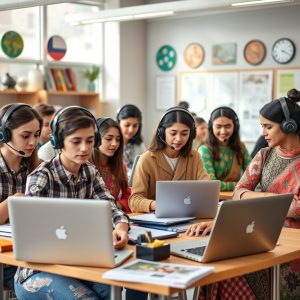
This approach emphasizes Personalized Educational Journeys, where instruction is tailored to individual strengths, weaknesses, and interests. Adaptive learning platforms, for instance, use data analytics to adjust content in real-time, ensuring that each student receives the right level of challenge and support. By meeting learners where they are, education becomes more inclusive, engaging, and effective.
Experiential Knowledge Acquisition: Learning by Doing
One of the most powerful aspects of active learning is its focus on Experiential Knowledge Acquisition. The idea is simple: people learn best when they are actively engaged in the process. Whether through simulations, role-playing, or hands-on projects, experiential learning bridges the gap between theory and practice, allowing students to apply what they’ve learned in meaningful ways.
Consider Project-Based Learning (PBL), a methodology where students work on complex, real-world problems over extended periods. In a PBL environment, learners collaborate, conduct research, and develop solutions—just as they would in a professional setting. This not only deepens their understanding of the subject matter but also hones essential skills like problem-solving, communication, and teamwork. When students see the direct impact of their work, motivation and retention soar.
Immersive Skill Development Through Gamification and Technology
Technology has become a cornerstone of modern education, enabling Immersive Skill Development in ways that were once unimaginable. Gamified Learning Experiences, for example, leverage the principles of game design to make learning more engaging and interactive. By incorporating elements like points, badges, leaderboards, and challenges, educators can transform even the most mundane topics into exciting, competitive experiences.
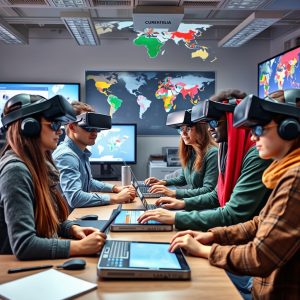
Virtual and augmented reality (VR/AR) take immersion a step further by creating simulated environments where students can practice skills in a risk-free setting. Medical students can perform virtual surgeries, engineering students can design and test prototypes, and language learners can engage in lifelike conversations with AI-powered avatars. These technologies not only enhance Digital Literacy Integration but also prepare students for a future where technology is deeply embedded in every industry.
Collaborative Problem Solving: The Power of Teamwork
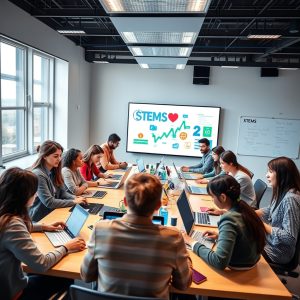
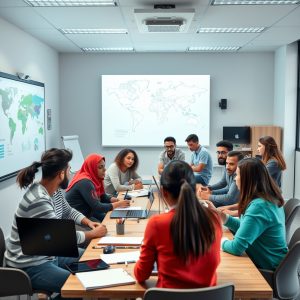
In an era where collaboration is a cornerstone of innovation, Collaborative Problem Solving has emerged as a critical component of active learning. Unlike traditional group work, which often leads to uneven participation, collaborative learning is structured to ensure that every student contributes meaningfully. Techniques like think-pair-share, jigsaw activities, and peer teaching encourage students to articulate their ideas, challenge assumptions, and build on each other’s knowledge.
This approach mirrors the realities of the modern workplace, where cross-functional teams tackle complex challenges together. By fostering a culture of collaboration, educators help students develop not only academic skills but also the Social Emotional Learning (SEL) competencies—such as empathy, resilience, and self-awareness—that are essential for personal and professional success.
Adaptive Learning Pathways: Meeting Students Where They Are
No two learners are the same, yet traditional education often treats them as if they were. Adaptive Learning Pathways address this challenge by using data and technology to create flexible, personalized learning experiences. These pathways adjust in real-time based on a student’s performance, ensuring that they are neither bored by material that’s too easy nor overwhelmed by content that’s too difficult.
For example, platforms like Khan Academy and Duolingo use algorithms to identify gaps in a student’s understanding and provide targeted exercises to address them. This Data-Driven Instructional Design allows educators to focus their efforts where they are most needed, maximizing efficiency and effectiveness. Moreover, adaptive learning empowers students to take ownership of their education, setting their own pace and goals.
Reflective Learning Practice: The Key to Lifelong Growth
Active learning doesn’t end when the lesson is over. Reflective Learning Practice encourages students to pause, think critically about their experiences, and extract meaningful insights. Whether through journaling, peer feedback, or guided discussions, reflection helps learners connect new knowledge to their existing understanding and identify areas for improvement.
This practice is particularly valuable in Competency-Based Education (CBE), where progress is measured by mastery of skills rather than time spent in a classroom. By reflecting on their performance, students can set goals, track their growth, and develop the metacognitive skills needed for Continuous Professional Development. In a world where lifelong learning is a necessity, reflection becomes a powerful tool for personal and professional growth.
Real-World Application: Bridging the Gap Between Classroom and Career
The ultimate goal of education is to prepare students for life beyond the classroom. Active Learning Methodologies excel in this regard by emphasizing Real-World Application. Whether through internships, service-learning projects, or industry partnerships, these approaches ensure that students gain practical experience that is directly relevant to their future careers.
For instance, Inquiry-Based Exploration encourages students to ask questions, conduct research, and develop solutions to real-world problems. This not only deepens their understanding of the subject matter but also cultivates the curiosity and critical thinking skills needed to navigate an ever-changing world. When students see the tangible impact of their learning, education becomes more than just a means to an end—it becomes a transformative experience.
As education continues to evolve, the principles of active learning are becoming increasingly central to how we teach and learn. By embracing methodologies that prioritize engagement, collaboration, and real-world application, we can create learning environments that are not only more effective but also more inspiring. The future of education is not about passive absorption of information; it’s about active participation, continuous growth, and the relentless pursuit of knowledge. In this new paradigm, every student has the opportunity to thrive, not just as a learner, but as a thinker, creator, and leader in their own right.