The Silent Revolution: How Hybrid Learning and Global Scholarships Are Redefining Cross-Cultural STEM Leadership

In an era where borders are becoming less relevant to education, the fusion of hybrid learning formats and international scholarships is quietly revolutionizing how students engage with global academic opportunities. This transformation is not just about accessibility—it’s about reimagining the very fabric of higher education to foster cross-cultural STEM leadership in ways previously unimaginable. The convergence of these two forces is dismantling traditional barriers, creating a dynamic ecosystem where merit, innovation, and collaboration thrive.
The Rise of Hybrid Learning: A Catalyst for Inclusivity
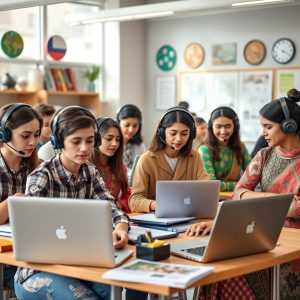
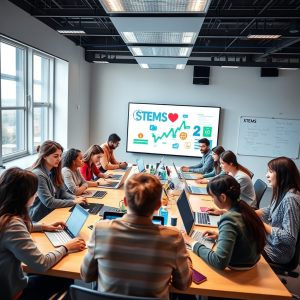
Hybrid learning, a blend of in-person and virtual education, has emerged as a cornerstone of modern academic mobility. By leveraging technology, universities and institutions can now offer programs that transcend geographical limitations, allowing students from diverse backgrounds to participate in global classrooms. This model is particularly impactful for STEM fields, where hands-on experience and theoretical knowledge must coexist. For instance, a student in Nairobi can collaborate on a robotics project with peers in Berlin, all while attending lectures from professors in Tokyo—all without leaving their home country.
The flexibility of hybrid learning also addresses one of the most persistent challenges in global education: financial constraints. Traditional study abroad programs often require significant investments in travel, accommodation, and living expenses. Hybrid formats reduce these costs, making international education more accessible to students who might otherwise be excluded. This shift is not just about convenience; it’s about democratizing education and ensuring that talent, not financial privilege, dictates who gets to participate in the global academic conversation.
Global Scholarships: The Engine of Cross-Cultural Innovation
While hybrid learning provides the platform, international scholarships supply the fuel that powers this silent revolution. Fully funded scholarships, merit-based grants, and academic fellowships are no longer just financial aids—they are strategic investments in the next generation of global leaders. Programs like the Global Undergraduate Exchange and Fulbright Scholarships are designed to identify and nurture talent from underrepresented regions, ensuring that the voices shaping the future of STEM are as diverse as the problems they aim to solve.
These scholarships do more than cover tuition fees. They often include mentorship opportunities, networking events, and cultural immersion experiences that are critical for developing cross-cultural communication skills. For example, a student from India awarded a postgraduate funding opportunity in Canada doesn’t just gain access to world-class research facilities—they also learn to navigate cultural nuances, build professional relationships across borders, and develop a global perspective that is invaluable in today’s interconnected world.
The Synergy of Hybrid Learning and Scholarships
The true power of this revolution lies in the synergy between hybrid learning and global scholarships. Together, they create a virtuous cycle: scholarships enable students to access hybrid programs, and hybrid programs make it feasible for more students to qualify for scholarships. This cycle is particularly transformative for students in STEM fields, where the demand for skilled professionals is outpacing the supply of qualified candidates in many regions.
Consider the case of a virtual student exchange program funded by a higher education grant. A student in Brazil might spend a semester collaborating with a team in South Korea on a sustainable energy project, all while taking courses at their home university. The hybrid format allows them to balance local commitments with global opportunities, while the scholarship ensures they can focus on their studies without financial stress. The result? A graduate who is not only technically proficient but also culturally fluent and ready to lead in a globalized workforce.
Cultural Immersion in a Digital Age
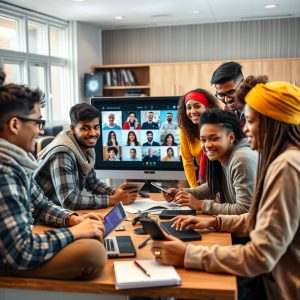
One of the most profound impacts of this revolution is how it redefines cultural immersion. Traditionally, cultural exchange required physical presence—living in a foreign country, navigating daily life in a new language, and adapting to unfamiliar social norms. While these experiences remain invaluable, hybrid learning offers a complementary approach. Virtual cultural immersion can take many forms: participating in online discussion forums with international peers, attending virtual guest lectures from global experts, or even collaborating on projects that require cross-cultural communication and problem-solving.
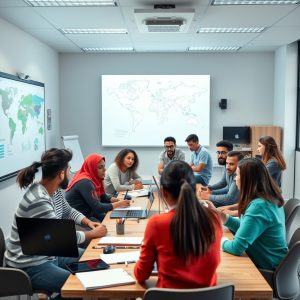
For STEM students, this digital cultural immersion is particularly powerful. Science and technology are universal languages, but their application is deeply influenced by cultural context. A student in Mexico working on a public health project with peers in Sweden will bring different perspectives to the table, enriching the research and fostering innovative solutions. Hybrid learning ensures that these collaborations are not limited to those who can afford to travel, making cross-cultural innovation the norm rather than the exception.
Career Development in a Globalized World
The benefits of this revolution extend far beyond the classroom. Employers in STEM fields are increasingly seeking candidates with global experience, cross-cultural communication skills, and the ability to work in diverse teams. Hybrid learning and international scholarships provide students with these competencies in ways that traditional education models cannot. For example, a student who participates in a blended education program with a focus on renewable energy will graduate with not only technical expertise but also a network of international contacts, experience working in multicultural teams, and a portfolio of projects that demonstrate their ability to apply their skills in real-world settings.
Moreover, the financial aid packages that accompany many scholarships often include career development resources such as internships, job placement assistance, and mentorship programs. These resources are designed to help students transition from academia to the workforce, ensuring that their global education translates into tangible career opportunities. In a world where the job market is increasingly competitive, these advantages can make all the difference.
The Future of Academic Mobility
As hybrid learning and global scholarships continue to evolve, they are reshaping the landscape of academic mobility. The traditional model of studying abroad—packing your bags and moving to a foreign country for a semester or year—is no longer the only path to global education. Instead, students can now curate their own international experiences, blending virtual and in-person elements to suit their needs and goals. This flexibility is particularly important for students who may have family or work commitments that make traditional study abroad programs unfeasible.
This shift also has implications for educational sustainability. By reducing the need for physical travel, hybrid learning formats lower the carbon footprint of international education. At the same time, scholarships that prioritize students from developing regions help to address global inequities in access to education. Together, these trends are creating a more sustainable and inclusive model of academic mobility—one that benefits students, institutions, and the planet alike.
The silent revolution in global education is not just about technology or funding—it’s about people. It’s about the student in Ghana who can now pursue a degree in artificial intelligence without leaving their community, the researcher in Indonesia who collaborates with peers in Europe on a groundbreaking climate study, and the young woman in Pakistan who secures a scholarship to study engineering and returns home to launch a startup that transforms her local economy. These are the stories that define the future of education, and they are being written every day, one hybrid classroom and one scholarship at a time. The world is becoming smaller, but the opportunities are growing larger, and the next generation of global leaders is already seizing them.