Cultural Fluency as the New Currency: How International Scholarships and Hybrid Learning Are Shaping Global STEM Changemakers

The world is shrinking, not in size, but in the barriers that once separated cultures, disciplines, and opportunities. For students eyeing a future in STEM, this interconnected reality presents both a challenge and an unprecedented advantage. The ability to navigate cross-cultural landscapes—once considered a soft skill—has now become a non-negotiable asset, as essential as technical expertise. At the heart of this transformation lies a powerful duo: international scholarships and hybrid learning formats, which together are redefining what it means to be a global STEM changemaker.
The Scholarship Ecosystem: More Than Just Financial Aid
Fully funded scholarships and higher education grants have long been the lifeline for students seeking to study abroad, but their role has evolved far beyond mere financial support. Today, they serve as gateways to cultural immersion, academic mobility, and career development opportunities that were once inaccessible to many. Programs like the Global Undergraduate Exchange and merit-based scholarships for postgraduate funding are not just about covering tuition; they are about fostering a generation of innovators who can think, collaborate, and solve problems across borders.
Take, for example, the Fulbright Program or the Chevening Scholarships, which have become synonymous with academic excellence and cross-cultural communication. These initiatives do more than fund education—they embed students in environments where they must adapt, learn, and contribute in ways that transcend the classroom. The result? Graduates who are not only technically proficient but also culturally fluent, capable of leading teams and projects in diverse settings.
Hybrid Learning: The Bridge Between Physical and Virtual Mobility
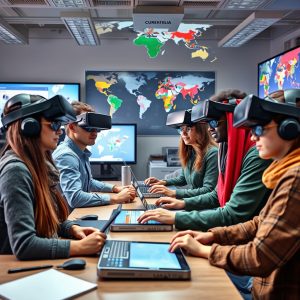
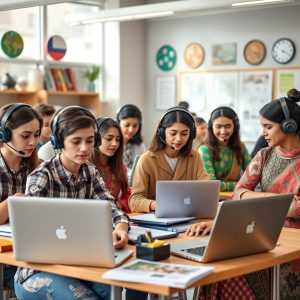
While traditional student exchange programs have always been the gold standard for cultural immersion, the rise of hybrid learning formats has democratized access to global education. Blended education programs, which combine in-person and virtual components, have made it possible for students to engage in academic mobility without the constraints of geography or financial limitations. Virtual student exchange initiatives, for instance, allow learners to participate in courses, research projects, and collaborative discussions with peers from around the world—all from their home institutions.
This shift has been particularly transformative for STEM fields, where hands-on experience and real-world problem-solving are critical. Hybrid learning enables students to work on global challenges, such as climate change or public health crises, alongside international teams. Platforms like Coursera, edX, and university-led virtual labs have made it possible to conduct experiments, analyze data, and publish research in collaboration with peers thousands of miles away. The result is a generation of STEM professionals who are as comfortable in a Zoom meeting with colleagues from Tokyo and Berlin as they are in a physical lab.
The Role of Cross-Cultural Communication in STEM
At the intersection of scholarships and hybrid learning lies a critical skill: cross-cultural communication. In STEM, where innovation often hinges on diverse perspectives, the ability to articulate ideas, negotiate differences, and build consensus across cultures is invaluable. International scholarships often include language training, cultural orientation sessions, and mentorship programs designed to hone these skills. Meanwhile, hybrid learning environments force students to navigate time zones, communication styles, and technological barriers, further sharpening their ability to collaborate effectively.
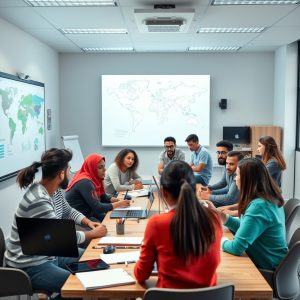
Consider the case of a computer science student from Nigeria collaborating on an AI project with peers from Germany and Japan. The technical challenges are significant, but the cultural nuances—such as differing approaches to problem-solving, decision-making, and even feedback—can be just as complex. Programs that emphasize cross-cultural communication prepare students to thrive in these scenarios, turning potential obstacles into opportunities for growth.
Career Development in a Globalized World
The benefits of international scholarships and hybrid learning extend far beyond graduation. Employers in STEM fields increasingly value candidates who can demonstrate global competence—those who have experience working in diverse teams, adapting to new environments, and solving problems with a multicultural lens. Financial aid packages and academic fellowships often include internships, research opportunities, and networking events that connect students with industry leaders, further enhancing their career prospects.
For example, the Erasmus+ program in Europe not only funds student mobility but also provides traineeships with companies across the continent. Similarly, the Schwarzman Scholars program in China offers leadership training and professional development alongside academic coursework. These experiences are not just resume boosters; they are transformative moments that shape how students approach their careers and their roles as global citizens.
The Future of Educational Sustainability
As the demand for global STEM talent continues to grow, so too does the need for sustainable models of education. Hybrid learning and international scholarships are not just trends; they are the foundation of a new era of educational sustainability. By reducing the carbon footprint associated with traditional student exchange programs and making education more accessible, these models ensure that the next generation of innovators can thrive without compromising the planet or their financial stability.
Moreover, the emphasis on cultural immersion and cross-cultural communication ensures that education remains relevant in an increasingly interconnected world. Students who participate in these programs are not just learning technical skills; they are developing the empathy, adaptability, and resilience needed to tackle the complex challenges of the 21st century.
The journey to becoming a global STEM changemaker is no longer reserved for the privileged few. Through the combined power of international scholarships and hybrid learning, students from all backgrounds can access the tools, networks, and experiences they need to make an impact. The question is no longer whether they can afford to pursue these opportunities, but whether they can afford not to. As the lines between local and global continue to blur, cultural fluency will emerge as the ultimate currency, and those who invest in it today will shape the future of innovation tomorrow.