The Invisible Threads: How Cross-Cultural Communication and Hybrid Learning Weave the Fabric of Global Academic Fellowships

The world has shrunk, not in size, but in the distance between ideas, cultures, and opportunities. The traditional boundaries of education—once confined to brick-and-mortar institutions—have dissolved into a dynamic, interconnected web where students from Nairobi collaborate with peers in Tokyo, and researchers in São Paulo co-author papers with colleagues in Berlin. At the heart of this transformation lies the fusion of cross-cultural communication and hybrid learning formats, two invisible threads stitching together the fabric of global academic fellowships and reshaping the future of higher education.
The Alchemy of Hybrid Learning
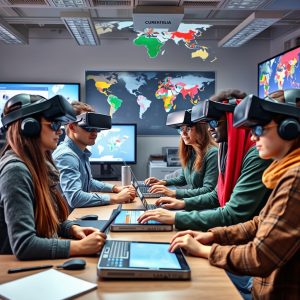
Hybrid learning is not merely a stopgap solution born out of necessity; it is a revolutionary model that blends the best of in-person and virtual education. By leveraging technology, hybrid programs dismantle geographical barriers, making academic mobility accessible to students who might otherwise be excluded due to financial, logistical, or political constraints. Imagine a student in rural India attending a seminar at Harvard, or a young researcher in Kenya participating in a lab project at MIT—all without leaving their home country. This is the promise of hybrid learning: a democratization of knowledge that transcends borders.
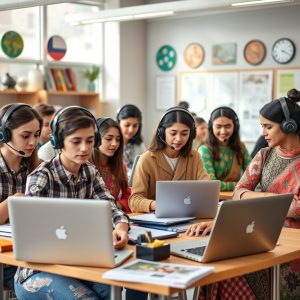
Yet, the true magic of hybrid learning lies in its ability to foster cross-cultural communication. When students from diverse backgrounds engage in collaborative projects, discussions, or research, they bring unique perspectives shaped by their cultures, languages, and experiences. These interactions cultivate empathy, challenge assumptions, and break down stereotypes, creating a richer, more nuanced understanding of global issues. In this way, hybrid learning becomes more than an educational tool—it becomes a catalyst for cultural immersion and personal growth.
The Role of Academic Fellowships in Bridging Gaps
While hybrid learning provides the platform, academic fellowships supply the fuel that propels students into these transformative experiences. Fellowships, particularly those that are fully funded or merit-based, remove the financial barriers that often prevent talented students from pursuing international opportunities. They open doors to global undergraduate exchanges, postgraduate funding, and research collaborations, enabling students to focus on what truly matters: learning, innovating, and contributing to their fields.
Consider the story of Amina, a computer science student from Nigeria who received a global STEM changemakers fellowship. Through a hybrid program, she spent a semester collaborating with a team of engineers in Germany on a project aimed at developing sustainable energy solutions. The experience not only enhanced her technical skills but also deepened her understanding of how cultural differences influence problem-solving approaches. Amina’s story is a testament to how fellowships, when paired with hybrid learning, can create pathways for students to become not just professionals, but global citizens.
The Power of Virtual Student Exchange
For many students, the idea of studying abroad remains a distant dream, hindered by visa restrictions, travel costs, or personal commitments. Virtual student exchange programs offer a compelling alternative, allowing students to engage in cross-cultural communication and academic collaboration without the need for physical relocation. These programs often include virtual classrooms, online forums, and digital project spaces where students can interact in real time, share ideas, and work together on assignments.
One such initiative is the Global Undergraduate Exchange Program, which connects students from underrepresented regions with universities in the U.S. and other countries. Through a blend of online coursework and in-person components, participants gain exposure to new academic environments while developing essential skills in cross-cultural communication. The impact of these programs extends far beyond the classroom, as students return home with a broader worldview and a network of international peers.
Blended Education: The Best of Both Worlds
Blended education programs take hybrid learning a step further by integrating in-person and virtual experiences into a cohesive, flexible model. These programs are particularly effective in fields like STEM, where hands-on training is essential but can be supplemented with online lectures, simulations, and collaborative projects. For example, a student pursuing a degree in environmental science might attend in-person lab sessions while completing theoretical coursework online, all while collaborating with peers from different countries on a sustainability project.
The benefits of blended education extend to institutions as well. Universities can expand their reach, attract a more diverse student body, and reduce costs associated with physical infrastructure. Moreover, blended programs often incorporate higher education grants and financial aid packages, making them accessible to a wider range of students. This inclusivity is key to fostering educational sustainability, ensuring that the next generation of leaders is as diverse as the challenges they will face.
The Ripple Effect of Cross-Cultural Communication
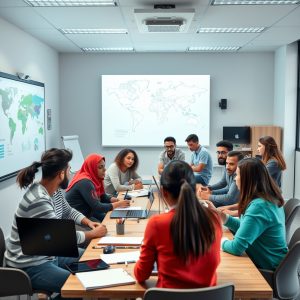
At its core, education is about more than acquiring knowledge—it’s about understanding the world and our place in it. Cross-cultural communication is the bridge that connects students to this broader perspective. When students engage with peers from different backgrounds, they learn to navigate cultural nuances, adapt to diverse communication styles, and develop a global mindset. These skills are invaluable in today’s interconnected world, where collaboration across borders is the norm rather than the exception.
Take the example of a group of engineering students from Brazil, Japan, and South Africa working together on a hybrid project to design a low-cost water filtration system. Each student brings a unique perspective shaped by their local context—water scarcity in South Africa, technological advancements in Japan, and community-driven solutions in Brazil. Through cross-cultural communication, they learn to combine their strengths, address conflicts, and create a solution that is greater than the sum of its parts. This is the power of hybrid learning and academic fellowships in action: they don’t just teach students how to solve problems—they teach them how to think globally.
As the lines between physical and virtual classrooms continue to blur, the opportunities for academic mobility and cultural immersion will only grow. The fusion of hybrid learning and cross-cultural communication is not just a trend; it is a fundamental shift in how we approach education. It challenges us to rethink what it means to be a student, a scholar, and a global citizen. In this new era, the classroom is no longer a room with four walls—it is the world itself, and the possibilities are limitless. The threads of opportunity are being woven together, one student, one fellowship, and one hybrid program at a time, creating a tapestry of global collaboration that will shape the future of education for generations to come.