The Catalyst of Change: How Global STEM Changemakers Are Leveraging Hybrid Learning and Scholarships for Cross-Cultural Innovation

The world of higher education is undergoing a seismic shift, one where the boundaries of classrooms are no longer confined by four walls or even geographical borders. At the heart of this transformation lies the fusion of hybrid learning formats and international scholarships, a dynamic duo that is not only redefining academic mobility but also empowering a new generation of global STEM changemakers. These innovators are not just students; they are problem-solvers, cultural ambassadors, and pioneers of a more interconnected and sustainable future.
The Hybrid Learning Revolution: A Gateway to Global Opportunities
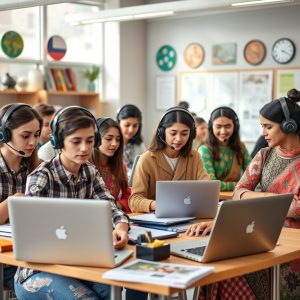
Hybrid learning, a blend of in-person and virtual education, has emerged as a game-changer in the realm of international education. It dismantles the traditional barriers of cost, accessibility, and logistics that have long hindered students from pursuing academic opportunities abroad. For instance, a student in Nairobi can now collaborate on a research project with peers in Berlin, attend lectures by professors in Tokyo, and participate in virtual labs hosted in Silicon Valley—all without leaving their home country. This flexibility is not just convenient; it is revolutionary.
Programs like the Global Undergraduate Exchange (Global UGRAD) and the Fulbright Foreign Student Program have embraced hybrid learning to expand their reach. By integrating virtual components, these initiatives can accommodate more students, offer diverse perspectives, and foster cross-cultural communication in ways that were previously unimaginable. The result? A richer, more inclusive educational experience that prepares students for the globalized workforce of the 21st century.
The Role of Scholarships in Democratizing Education
While hybrid learning breaks down logistical barriers, scholarships address the financial ones. Fully funded scholarships and higher education grants are the lifeblood of academic mobility, enabling students from underrepresented backgrounds to access world-class education. Organizations like the Mastercard Foundation, the Rhodes Trust, and the Chevening Scholarship program are leading the charge, offering merit-based scholarships that cover tuition, living expenses, and even travel costs.
These financial aid packages do more than just alleviate the burden of student debt; they level the playing field. They ensure that talent, not financial means, determines who gets to participate in global education. For STEM students, in particular, this is a game-changer. Fields like artificial intelligence, renewable energy, and biotechnology thrive on diverse perspectives, and scholarships are the key to unlocking that diversity.
Cultural Immersion in a Digital Age: The Power of Virtual Exchange
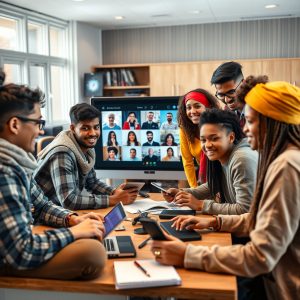
One of the most profound benefits of hybrid learning is its ability to facilitate cultural immersion, even in a virtual setting. Virtual student exchange programs, such as those offered by the Stevens Initiative and the Virtual Exchange Coalition, allow students to engage in cross-cultural dialogue, collaborate on projects, and build relationships with peers from around the world. These experiences are not just about learning a new language or understanding a different culture; they are about developing the soft skills—empathy, adaptability, and global awareness—that are essential for success in today’s interconnected world.
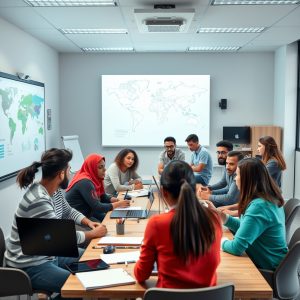
For example, a student in Mexico City might work on a sustainability project with classmates in Mumbai and Cape Town. Through this collaboration, they gain firsthand experience in navigating cultural differences, resolving conflicts, and leveraging diverse perspectives to solve complex problems. These are the kinds of experiences that shape global citizens and future leaders.
Blended Education Programs: The Best of Both Worlds
Blended education programs take hybrid learning a step further by combining the structure of traditional in-person education with the flexibility of online learning. These programs are particularly effective in fields like STEM, where hands-on experience is crucial. For instance, a student might complete theoretical coursework online and then travel abroad for a short-term intensive lab or fieldwork experience. This model not only reduces costs but also maximizes the impact of the time spent abroad.
Institutions like the Massachusetts Institute of Technology (MIT) and the University of Oxford have pioneered blended programs that allow students to earn credits through a mix of online and in-person coursework. These programs are designed to be accessible, affordable, and adaptable to the needs of students from diverse backgrounds. They represent the future of academic mobility, where education is not a one-size-fits-all experience but a personalized journey.
Career Development: The Long-Term Impact of Global Education
The benefits of hybrid learning and international scholarships extend far beyond the classroom. For students, these opportunities are a springboard to career development, offering access to global networks, internships, and job opportunities that would otherwise be out of reach. Employers increasingly value candidates with international experience, as it demonstrates adaptability, cultural fluency, and a global mindset—qualities that are essential in today’s competitive job market.
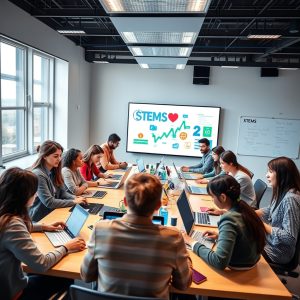
Moreover, the skills gained through cross-cultural communication and collaboration are transferable to virtually any industry. Whether a student aspires to work in tech, healthcare, or public policy, the ability to navigate diverse environments and perspectives is a critical asset. Programs like the Global STEM Changemakers Initiative are specifically designed to equip students with these skills, ensuring they are not just academically prepared but also career-ready.
The Ripple Effect: How Global STEM Changemakers Are Shaping the Future
The impact of hybrid learning and international scholarships is not limited to individual students. It creates a ripple effect that extends to communities, industries, and even nations. When students return home after studying abroad—whether virtually or in person—they bring with them new ideas, skills, and connections that can drive innovation and economic growth. For example, a student who participates in a virtual exchange program focused on renewable energy might return to their home country and launch a startup that addresses local energy challenges. This is the power of global education: it turns students into changemakers.
Initiatives like the Global Undergraduate Exchange Program and the Fulbright Program are not just investing in students; they are investing in the future. By fostering cross-cultural collaboration and innovation, they are helping to solve some of the world’s most pressing challenges, from climate change to healthcare disparities. The students who participate in these programs are not just beneficiaries of scholarships; they are the architects of a more sustainable and equitable world.
As the landscape of higher education continues to evolve, the fusion of hybrid learning and international scholarships will remain a cornerstone of academic mobility. It is a testament to the power of education to transcend borders, bridge divides, and empower the next generation of global leaders. The opportunities are vast, the potential is limitless, and the future is bright for those who dare to seize it. The question is no longer whether students can afford to study abroad, but whether the world can afford not to invest in them.