The Hidden Catalysts: How Merit-Based Scholarships and Blended Education Are Fueling Global STEM Changemakers

The modern educational landscape is undergoing a seismic shift, driven by the convergence of two powerful forces: merit-based scholarships and blended education programs. These elements are not merely supplementary tools but hidden catalysts propelling a new generation of global STEM changemakers. As borders blur and digital connectivity redefines traditional learning, students are no longer confined to the limitations of geography or financial constraints. Instead, they are stepping into a world where opportunity is democratized, and innovation knows no bounds.
The Scholarship Ecosystem: More Than Just Financial Aid
Merit-based scholarships have long been celebrated for their role in making higher education accessible. Yet, their impact extends far beyond alleviating financial burdens. These scholarships serve as a validation of a student’s potential, often acting as a springboard for academic and professional growth. For STEM students, in particular, such recognition can open doors to research opportunities, internships, and collaborations that would otherwise remain out of reach. Programs like the Fulbright Scholarship, Chevening Awards, and the DAAD scholarships are not just funding education—they are fostering a global network of thinkers, innovators, and problem-solvers.
What sets merit-based scholarships apart is their emphasis on excellence and potential. Unlike need-based aid, which focuses primarily on financial circumstances, merit-based scholarships reward talent, dedication, and the drive to make a difference. This creates a ripple effect, where scholars are inspired to push boundaries, contribute to their fields, and eventually give back to their communities. The result? A self-sustaining cycle of innovation and progress that transcends borders.
Blended Education: The Bridge Between Tradition and Innovation
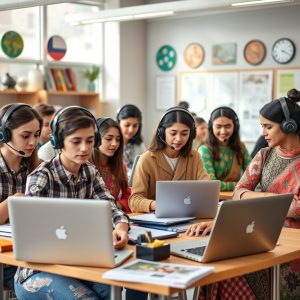
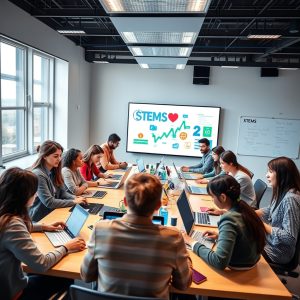
Blended education programs, which combine in-person and virtual learning, have emerged as a game-changer in the realm of academic mobility. These programs offer the best of both worlds: the structure and engagement of traditional classrooms and the flexibility and accessibility of online learning. For STEM students, this hybrid model is particularly transformative. It allows them to collaborate with peers and professors from around the globe, access cutting-edge resources, and participate in research projects without the constraints of physical location.
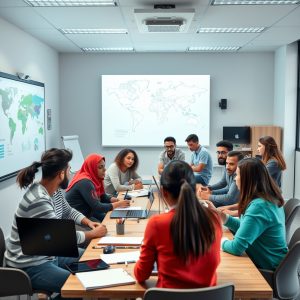
One of the most compelling aspects of blended education is its ability to foster cross-cultural communication. Students from diverse backgrounds bring unique perspectives to the table, enriching discussions and challenging conventional thinking. This cultural exchange is not just an added benefit—it is a cornerstone of modern STEM education. In fields like artificial intelligence, renewable energy, and biotechnology, where global challenges demand global solutions, the ability to collaborate across cultures is invaluable.
The Role of Technology in Academic Mobility
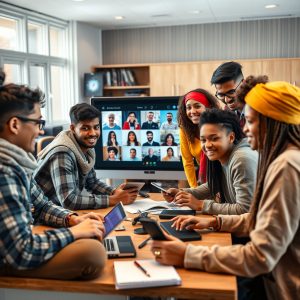
Technology is the backbone of blended education, enabling seamless interaction between students and educators regardless of their physical locations. Virtual labs, interactive simulations, and AI-driven learning platforms are just a few examples of how technology is enhancing the educational experience. For instance, a student in Nairobi can now participate in a virtual exchange program with a university in Tokyo, gaining exposure to advanced research and methodologies that were once inaccessible.
Moreover, technology is breaking down language barriers, making it easier for students to engage in academic discourse. Real-time translation tools and collaborative platforms like Slack and Zoom are fostering a sense of community among students, regardless of their native languages. This level of connectivity is not just convenient—it is revolutionary, paving the way for a truly global classroom.
Cultural Immersion: The Unseen Classroom
While blended education programs offer flexibility, they also provide opportunities for cultural immersion that rival traditional study abroad experiences. Virtual student exchanges, for example, allow students to engage with local customs, traditions, and perspectives without leaving their homes. These experiences are not just about observing another culture—they are about understanding it, embracing it, and integrating it into one’s worldview.
For STEM students, cultural immersion is particularly impactful. It challenges them to think critically about how their work intersects with global issues like climate change, healthcare disparities, and technological inequality. By engaging with peers from different cultural backgrounds, they gain a deeper appreciation for the complexities of these challenges and the importance of inclusive solutions. This holistic approach to education is what sets the next generation of STEM leaders apart.
Career Development: Beyond the Degree
The benefits of merit-based scholarships and blended education extend far beyond the classroom. These opportunities equip students with the skills, networks, and experiences needed to thrive in an increasingly competitive job market. For STEM graduates, this means access to career development opportunities that are both diverse and dynamic. Internships with multinational corporations, research collaborations with leading universities, and participation in global conferences are just a few examples of how these programs can shape a student’s professional trajectory.
Furthermore, the cross-cultural communication skills gained through blended education are highly valued by employers. In a world where businesses operate on a global scale, the ability to navigate cultural nuances and collaborate with international teams is a critical asset. Students who participate in these programs are not just earning degrees—they are building careers that are as diverse as they are rewarding.
The fusion of merit-based scholarships and blended education is more than a trend—it is a movement. It is a testament to the power of innovation, inclusion, and the unyielding human spirit. As students from all corners of the globe come together to learn, collaborate, and innovate, they are not just shaping their own futures. They are redefining what it means to be a global citizen, one breakthrough at a time. The world is no longer a collection of isolated communities but a vibrant, interconnected network of changemakers, and the tools to join this network have never been more accessible.