The Intersection of Hybrid Learning and Cross-Cultural Scholarships: Crafting a New Era of Global STEM Leadership
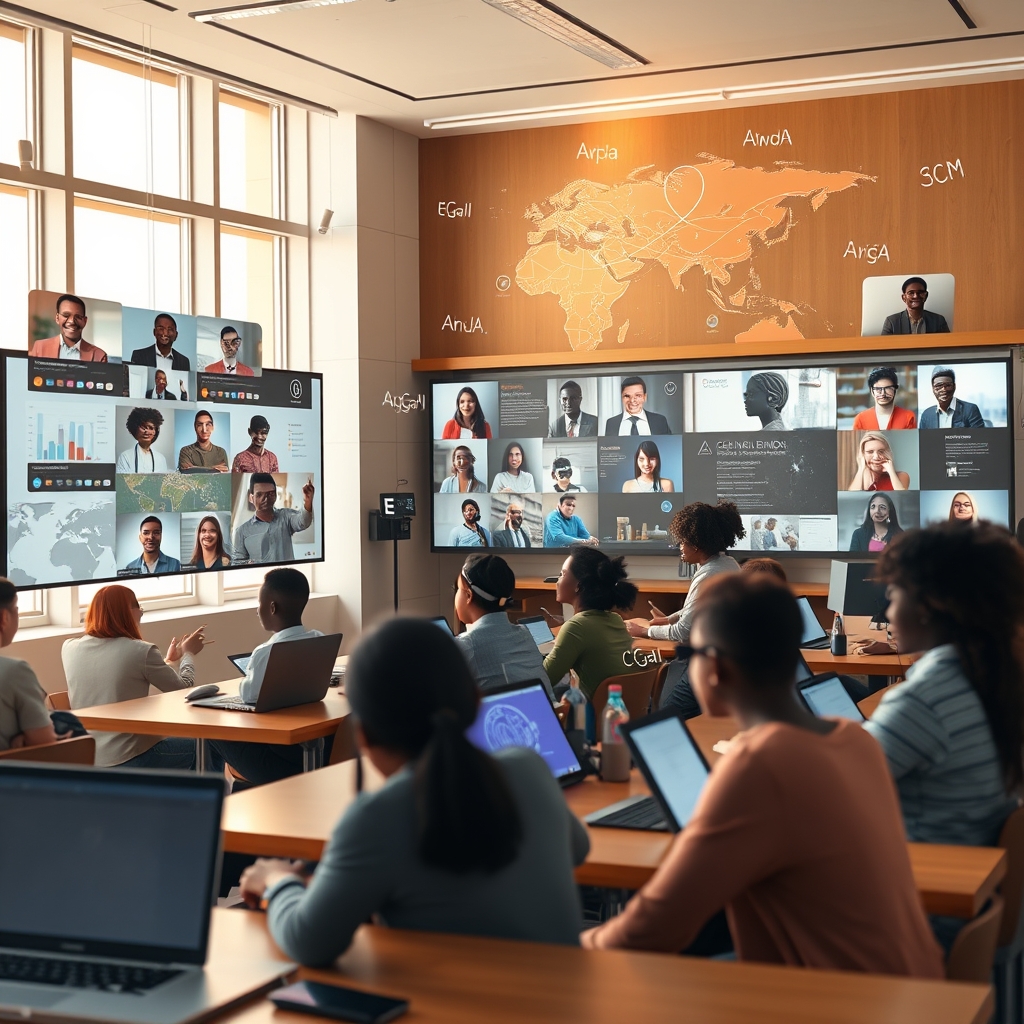
In an increasingly interconnected world, the boundaries of education are expanding beyond traditional classrooms. The fusion of hybrid learning formats and cross-cultural scholarships is not just a trend but a transformative force, reshaping how students engage with global academic opportunities. This evolution is particularly impactful in STEM fields, where collaboration and innovation thrive on diverse perspectives and shared knowledge. The question is no longer whether students can access international education, but how they can leverage these opportunities to become leaders in their fields.
The Rise of Hybrid Learning in Global Education
Hybrid learning, a blend of in-person and virtual education, has emerged as a cornerstone of modern academic mobility. It dismantles geographical barriers, allowing students to participate in courses, research, and collaborations without the constraints of physical relocation. For instance, a student in Nairobi can now attend a lecture at MIT, collaborate on a project with peers in Tokyo, and submit assignments to professors in Berlin—all while remaining in their home country. This flexibility is not just convenient; it is revolutionary for students who may lack the financial means or logistical support to study abroad full-time.
Moreover, hybrid learning fosters inclusivity by accommodating diverse learning styles and schedules. Students juggling work, family responsibilities, or financial constraints can tailor their education to fit their lives, rather than the other way around. This adaptability is particularly crucial for those from underrepresented regions, where access to traditional study-abroad programs may be limited. By democratizing education, hybrid learning is leveling the playing field and creating pathways for talent that might otherwise go untapped.
The Role of Cross-Cultural Scholarships in Bridging Gaps
While hybrid learning provides the infrastructure for global education, cross-cultural scholarships supply the fuel. Programs like the Global Undergraduate Exchange (Global UGRAD) and Fulbright Scholarships are not merely financial aids; they are gateways to cultural immersion and academic growth. These scholarships often cover tuition, living expenses, and even travel costs, removing the financial barriers that prevent many students from pursuing international education. But their impact goes beyond economics—they cultivate cross-cultural communication skills, foster empathy, and build networks that last a lifetime.
For STEM students, these scholarships are particularly transformative. Fields like engineering, computer science, and environmental science thrive on global collaboration, and scholarships enable students to contribute to—and learn from—international research projects. For example, a student from Brazil studying renewable energy through a hybrid program might collaborate with peers in Germany and India to develop sustainable solutions tailored to different climates and infrastructures. Such experiences not only enhance technical skills but also instill a global mindset, preparing students to tackle challenges that transcend borders.
Virtual Student Exchange: The New Frontier of Cultural Immersion
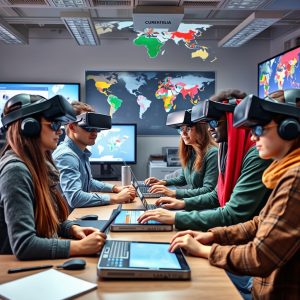
Virtual student exchange programs are redefining what it means to study abroad. These initiatives allow students to engage in cultural immersion without leaving their homes, participating in language exchanges, virtual internships, and collaborative projects with peers from around the world. Platforms like Zoom, Slack, and even virtual reality environments are becoming the new classrooms, where students can debate, create, and innovate in real time.
One notable example is the Stevens Initiative, which connects students in the U.S. with peers in the Middle East and North Africa through virtual exchange. Participants work on projects that address real-world challenges, such as climate change or public health, while developing cross-cultural communication skills. These programs prove that cultural immersion is not confined to physical travel; it is about the exchange of ideas, perspectives, and experiences, regardless of location.
Blended Education Programs: The Best of Both Worlds
Blended education programs take hybrid learning a step further by integrating in-person and virtual components into a cohesive academic experience. These programs often include short-term study-abroad stints, intensive workshops, or residential sessions, combined with online coursework. For example, a student might spend a semester studying remotely and then travel to a partner university for a two-week immersion program, where they apply their knowledge in a hands-on setting.
This model is particularly effective for STEM students, who benefit from both theoretical learning and practical application. A computer science student, for instance, might complete online modules on artificial intelligence before traveling to a tech hub like Silicon Valley or Bangalore to work on a real-world project. Such experiences not only deepen technical expertise but also expose students to different work cultures and innovation ecosystems, preparing them for careers in a globalized job market.
Financial Aid Packages: Making Global Education Accessible
Despite the promise of hybrid and blended learning, financial barriers remain a significant hurdle for many students. This is where financial aid packages and merit-based scholarships play a pivotal role. Organizations like the Institute of International Education (IIE) and the United World Colleges (UWC) offer grants that cover everything from tuition to travel expenses, ensuring that deserving students can participate in global education programs regardless of their financial background.
These financial aid packages are often tailored to specific needs, such as supporting students from low-income backgrounds or underrepresented regions. For example, the Mastercard Foundation Scholars Program provides comprehensive scholarships to students from Africa, covering not just academic expenses but also leadership training and career development opportunities. By addressing financial barriers, these programs ensure that the benefits of global education are not limited to the privileged few.
The Future of Academic Mobility: A Sustainable Model
As the world grapples with climate change and sustainability challenges, the traditional model of academic mobility—characterized by frequent international travel—is being re-evaluated. Hybrid and blended learning offer a more sustainable alternative, reducing the carbon footprint associated with physical travel while still delivering the benefits of cross-cultural exchange. This shift aligns with the growing emphasis on educational sustainability, where the goal is to create learning experiences that are both impactful and environmentally responsible.
Moreover, hybrid learning models are scalable, allowing universities and organizations to reach a larger number of students without the logistical constraints of physical infrastructure. This scalability is particularly important for postgraduate students, who often juggle academic pursuits with professional and personal responsibilities. By offering flexible, accessible education, hybrid models are paving the way for a new era of academic mobility—one that is inclusive, sustainable, and globally connected.
The fusion of hybrid learning and cross-cultural scholarships is more than an educational trend; it is a movement toward a more equitable and interconnected world. By breaking down barriers—whether geographical, financial, or cultural—these innovations are empowering students to become global citizens and leaders in their fields. The opportunities are vast, but the real impact lies in how students choose to seize them. As the lines between local and global education continue to blur, the next generation of STEM changemakers will be defined not by where they come from, but by the ideas they share and the solutions they create together.