The Language of Opportunity: How Cross-Cultural Communication and Hybrid Learning Are Redefining International Student Mobility

In an era where borders are increasingly porous and digital connectivity bridges continents, the landscape of higher education is undergoing a profound transformation. The fusion of cross-cultural communication and hybrid learning formats is not just reshaping how students engage with academic content but also redefining the very essence of international student mobility. No longer confined to physical classrooms or traditional exchange programs, today’s learners are navigating a dynamic ecosystem where virtual collaboration and in-person immersion coexist, creating unprecedented opportunities for growth, innovation, and global citizenship.
The Hybrid Learning Revolution
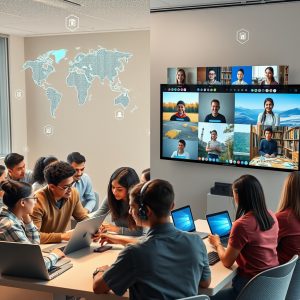
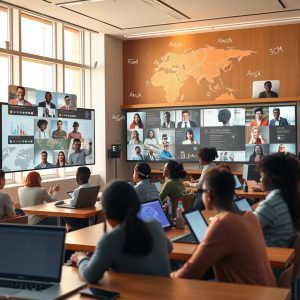
Hybrid learning formats have emerged as a cornerstone of modern education, blending the flexibility of online instruction with the richness of face-to-face interaction. For international students, this model offers a lifeline—a way to access world-class education without the constraints of geography or financial barriers. Universities and institutions are leveraging technology to deliver lectures, discussions, and even lab work through digital platforms, while still preserving the invaluable experience of cultural exchange through short-term residencies or on-campus intensives. This approach not only democratizes education but also fosters resilience and adaptability, skills that are indispensable in an interconnected world.
Consider the Global Undergraduate Exchange Program, which has embraced hybrid learning to expand its reach. Students from diverse backgrounds can now participate in virtual coursework while also spending a semester abroad, immersing themselves in a new culture. This dual approach ensures that learners gain both academic rigor and the soft skills necessary to thrive in multicultural environments. The result? A generation of students who are not just academically proficient but also culturally fluent, ready to tackle global challenges with empathy and creativity.
The Power of Cross-Cultural Communication
At the heart of this transformation lies cross-cultural communication—a skill that transcends language barriers and fosters meaningful connections. In a hybrid learning environment, students are constantly engaging with peers from different cultural, linguistic, and academic backgrounds. These interactions, whether through virtual group projects or in-person workshops, cultivate a deeper understanding of diverse perspectives, challenging preconceived notions and broadening worldviews.
Programs like the Virtual Student Exchange initiative are pioneering this shift by creating digital spaces where students can collaborate on research, debate global issues, and build networks that span continents. These platforms are not just about exchanging ideas; they are about forging relationships that endure long after the program ends. For instance, a student in Nairobi working on a renewable energy project with peers in Berlin and Tokyo gains more than technical knowledge—they develop the ability to navigate cultural nuances, negotiate differences, and communicate effectively across time zones. These are the skills that define the leaders of tomorrow.
Scholarships as Catalysts for Change
While hybrid learning and cross-cultural communication are powerful tools, their impact is magnified when paired with financial support. Fully funded scholarships and higher education grants play a pivotal role in ensuring that these opportunities are accessible to students from all socioeconomic backgrounds. Organizations like the Global STEM Changemakers Initiative are leading the charge, offering merit-based scholarships that cover tuition, travel, and living expenses for students pursuing degrees in science, technology, engineering, and mathematics. These scholarships are not just about financial aid; they are about leveling the playing field and empowering the next generation of innovators.
Take the story of Aisha, a young woman from Lagos who dreamed of studying computer science but lacked the resources to study abroad. Through a fully funded scholarship, she was able to enroll in a hybrid program that combined online coursework with a six-month residency at a university in Canada. The experience transformed her career trajectory, opening doors to internships and research opportunities she never imagined possible. Aisha’s journey is a testament to the transformative power of scholarships in breaking down barriers and creating pathways to success.
The Future of Academic Mobility
The convergence of hybrid learning, cross-cultural communication, and financial aid is not just a trend—it is the future of academic mobility. As institutions continue to innovate, we are likely to see even more blended education programs that prioritize flexibility, accessibility, and cultural immersion. These programs will not only prepare students for the global workforce but also foster a sense of shared responsibility in addressing the world’s most pressing challenges, from climate change to public health crises.
Moreover, the rise of virtual exchange programs is making it possible for students to gain international experience without leaving their home countries. This is particularly significant for learners in regions with limited access to traditional study abroad opportunities. By participating in virtual internships, global classrooms, and collaborative research projects, students can develop the skills and networks needed to thrive in an increasingly interconnected world. The boundaries of education are expanding, and with them, the possibilities for personal and professional growth.
Cultural Immersion in a Digital Age
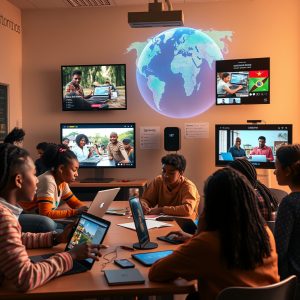
One of the most compelling aspects of hybrid learning is its ability to facilitate cultural immersion in ways that were previously unimaginable. While nothing can fully replicate the experience of living in a foreign country, digital tools are bridging the gap by creating immersive environments where students can engage with local communities, languages, and traditions. Virtual reality (VR) field trips, language exchange platforms, and online cultural workshops are just a few examples of how technology is enhancing the study abroad experience.
For example, a student participating in a hybrid exchange program might attend virtual lectures from professors in Tokyo, collaborate on a project with classmates in São Paulo, and then travel to Berlin for an in-person residency. Along the way, they might use VR to explore historical sites in Rome or practice Mandarin with a language partner in Beijing. These experiences not only enrich their academic journey but also cultivate a global mindset that is essential for success in today’s world.
The fusion of hybrid learning and cross-cultural communication is more than just a shift in educational methodology—it is a movement toward a more inclusive, interconnected, and innovative future. As students from diverse backgrounds come together to learn, collaborate, and grow, they are not just preparing for careers; they are shaping the future of our global community. The opportunities are boundless, and the impact is profound, as each student becomes a bridge between cultures, a catalyst for change, and a testament to the power of education to transcend borders.