The Power of Inquiry: How Inquiry-Based Exploration Transforms Modern Learning
Education is no longer confined to the passive absorption of facts and figures. The shift toward dynamic, student-centered approaches has redefined how knowledge is acquired, skills are developed, and understanding is deepened. At the heart of this transformation lies inquiry-based exploration, a methodology that empowers learners to ask questions, seek answers, and construct meaning through active engagement. Unlike traditional rote learning, this approach fosters holistic cognitive growth by encouraging curiosity, critical thinking, and real-world application.
The Foundations of Inquiry-Based Learning
Inquiry-based exploration is rooted in the belief that learning is most effective when it stems from genuine curiosity. Rather than presenting information in a linear, teacher-led format, educators design environments where students drive their own learning journeys. This methodology aligns with student-centric pedagogy, placing the learner at the center of the educational experience. By posing open-ended questions, students develop the ability to analyze, synthesize, and evaluate information—skills that are essential in an increasingly complex world.
Research in cognitive science supports this approach, demonstrating that active engagement with material leads to deeper retention and understanding. When students explore topics through inquiry, they move beyond surface-level memorization and begin to connect concepts to their own experiences. This process not only enhances competency-based education but also cultivates a lifelong love of learning.
From Theory to Practice: Real-World Applications
One of the most compelling aspects of inquiry-based learning is its emphasis on real-world application. Unlike abstract exercises that exist solely within the confines of a classroom, this methodology encourages students to tackle authentic problems. For example, a science class might investigate local environmental issues, requiring students to collect data, analyze trends, and propose solutions. Similarly, a history lesson could involve examining primary sources to construct narratives about past events, fostering collaborative problem-solving and interactive knowledge building.
This approach also bridges the gap between academic learning and practical skills. By engaging in hands-on projects, students develop immersive skill development that prepares them for future careers. Whether through project-based learning or experiential knowledge acquisition, learners gain confidence in their ability to apply knowledge in dynamic, unpredictable settings. This not only enhances their academic performance but also equips them with the adaptability needed in today’s rapidly evolving job market.
The Role of Technology in Inquiry-Based Learning
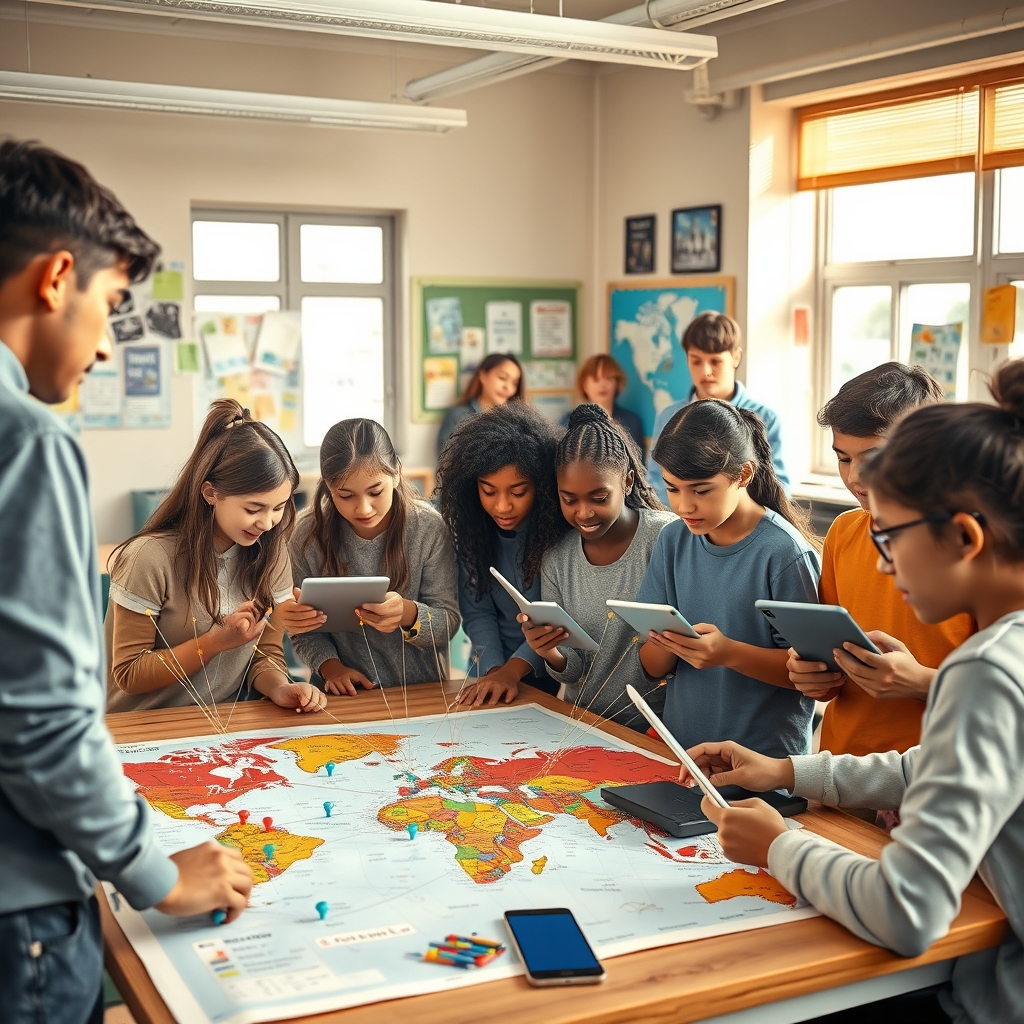
In the digital age, technology plays a pivotal role in facilitating inquiry-based exploration. Digital literacy integration allows students to access vast resources, collaborate across distances, and leverage tools that enhance their investigative processes. Platforms like virtual labs, interactive simulations, and online research databases provide opportunities for adaptive learning pathways, where students can explore topics at their own pace and according to their unique interests.
Moreover, technology enables gamified learning experiences, which can make inquiry more engaging and motivating. For instance, educational games that simulate real-world scenarios encourage students to experiment, fail, and iterate—key components of the inquiry process. These tools also support data-driven instructional design, allowing educators to track progress and tailor experiences to individual needs. By integrating technology thoughtfully, inquiry-based learning becomes more accessible, interactive, and impactful.
Fostering Social and Emotional Growth
Inquiry-based exploration is not solely about academic achievement; it also nurtures social-emotional learning (SEL). When students collaborate on projects, they develop essential interpersonal skills such as communication, empathy, and teamwork. The process of inquiry often involves navigating challenges, receiving feedback, and reflecting on outcomes—all of which contribute to emotional resilience and self-awareness.
Additionally, this methodology encourages reflective learning practice, where students assess their own progress and identify areas for growth. By setting goals, monitoring their development, and celebrating achievements, learners cultivate a growth mindset that extends beyond the classroom. This holistic approach ensures that education addresses not just the intellect but also the emotional and social dimensions of personal development.
Challenges and Considerations
While the benefits of inquiry-based learning are substantial, its implementation is not without challenges. Educators must be skilled in scaffolding complex concepts, providing the right level of support to guide students without stifling their independence. This requires a deep understanding of pedagogical strategies, as well as the ability to differentiate instruction based on individual needs. Professional development and continuous professional development are essential to equip teachers with the tools and confidence to facilitate inquiry effectively.
Another consideration is the need for a supportive learning environment. Inquiry-based exploration thrives in settings where curiosity is encouraged, mistakes are viewed as learning opportunities, and collaboration is valued. Schools must cultivate cultures that prioritize these values, ensuring that both students and educators feel empowered to take risks and explore new ideas. Without this foundation, the potential of inquiry-based learning may remain untapped.
As education continues to evolve, the principles of inquiry-based exploration offer a powerful framework for fostering meaningful learning experiences. By placing students at the center of their educational journeys, this approach not only enhances academic outcomes but also prepares learners to navigate the complexities of the modern world. The shift from passive reception to active discovery is more than a pedagogical trend—it is a fundamental reimagining of what it means to learn, grow, and thrive in an ever-changing landscape.