Beyond the Classroom: How Immersive Skill Development is Redefining Modern Education
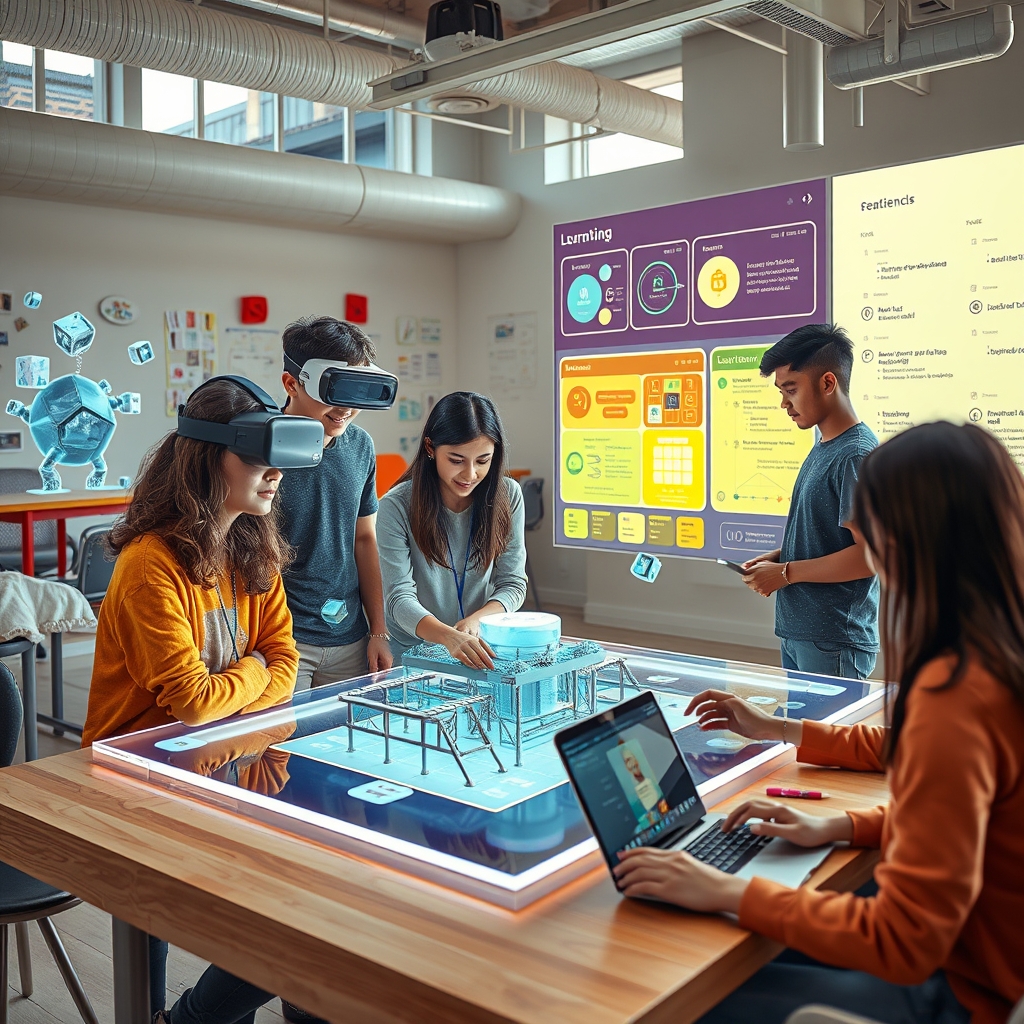
Education is no longer confined to the four walls of a classroom or the rigid structure of traditional lectures. As the demands of the modern workforce evolve, so too must the methods by which we acquire knowledge and skills. Immersive skill development has emerged as a transformative approach, blending experiential knowledge acquisition with adaptive learning pathways to create dynamic, student-centric educational experiences. This shift is not just about keeping pace with change—it’s about redefining what it means to learn, grow, and thrive in an increasingly complex world.
The Power of Experiential Knowledge Acquisition
At the heart of immersive skill development lies the principle of learning by doing. Experiential knowledge acquisition moves beyond passive absorption of information, encouraging learners to engage directly with concepts through real-world application. Whether it’s a biology student conducting field research, an engineering team designing a prototype, or a business class simulating a startup, these hands-on experiences foster deeper understanding and retention. Research has consistently shown that learners retain only about 10% of what they read but up to 90% of what they do, underscoring the power of this approach.
This methodology is particularly effective in bridging the gap between theory and practice. For instance, medical students who participate in clinical rotations or virtual reality simulations develop diagnostic skills far more rapidly than those who rely solely on textbooks. Similarly, aspiring software developers benefit immensely from hackathons or open-source contributions, where they apply coding principles to solve tangible problems. The result is not just competence but confidence—a critical factor in preparing learners for the unpredictability of real-world challenges.
Adaptive Learning Pathways: Tailoring Education to the Individual
One size does not fit all in education, and adaptive learning pathways recognize this fundamental truth. By leveraging data-driven instructional design, educators can create personalized educational journeys that cater to each student’s strengths, weaknesses, and pace of learning. Artificial intelligence and machine learning play a pivotal role here, analyzing performance data to recommend resources, adjust difficulty levels, and even predict areas where a learner might struggle.
For example, platforms like Khan Academy and Duolingo use adaptive algorithms to tailor lessons to individual progress, ensuring that learners are neither bored by material that’s too easy nor overwhelmed by content that’s too advanced. This approach is especially valuable in competency-based education, where mastery of skills takes precedence over time spent in a classroom. Students advance not by sitting through a predetermined number of lectures but by demonstrating proficiency, allowing them to move at their own pace and focus on areas that require more attention.
Collaborative Problem Solving: Learning as a Team Sport
Immersive skill development thrives in environments where collaboration is encouraged. Collaborative problem solving shifts the focus from individual achievement to collective growth, mirroring the team-based dynamics of most modern workplaces. Whether through project-based learning, group simulations, or peer-to-peer teaching, students learn to communicate, negotiate, and innovate together—skills that are indispensable in today’s interconnected world.
Consider the success of programs like FIRST Robotics, where students work in teams to design, build, and compete with robots. These experiences teach technical skills like coding and engineering, but they also cultivate soft skills such as leadership, resilience, and adaptability. Similarly, in business schools, case competitions challenge students to tackle real-world problems in teams, fostering creativity and strategic thinking. The ability to collaborate effectively is no longer a nice-to-have; it’s a necessity, and immersive learning environments are uniquely positioned to nurture it.
Gamified Learning Experiences: Making Education Engaging
Gamification has revolutionized the way we approach learning by making it interactive, engaging, and—dare we say—fun. By incorporating elements of game design, such as points, badges, leaderboards, and challenges, educators can motivate students to actively participate in their own learning. Gamified learning experiences tap into intrinsic motivators like curiosity, competition, and a sense of achievement, transforming even the most mundane subjects into captivating adventures.
Language learning apps like Memrise and Babbel use gamification to make vocabulary acquisition feel like a game, while platforms like Classcraft turn classroom management into an immersive role-playing experience. Even corporate training programs have embraced this trend, with companies like Deloitte and Microsoft using gamified modules to train employees on complex topics like cybersecurity and compliance. The result is higher engagement, better retention, and a more enjoyable learning process overall.
Digital Literacy Integration: Preparing for a Tech-Driven World
In an era where technology permeates every aspect of life, digital literacy is no longer optional—it’s essential. Immersive skill development integrates digital literacy into the learning process, ensuring that students are not only consumers of technology but also creators and critical thinkers. From coding and data analysis to digital citizenship and cybersecurity, these skills empower learners to navigate and shape the digital landscape with confidence.
Schools and universities are increasingly incorporating digital literacy into their curricula through initiatives like maker spaces, coding bootcamps, and virtual reality labs. For example, students might use 3D printers to bring their designs to life, analyze big data sets to uncover trends, or create digital portfolios to showcase their work. These experiences not only build technical proficiency but also foster creativity, problem-solving, and adaptability—skills that are crucial in a rapidly evolving job market.
Reflective Learning Practice: The Key to Lifelong Growth
Immersive skill development is not just about acquiring new skills; it’s about cultivating a mindset of continuous growth. Reflective learning practice encourages students to pause, assess, and internalize their experiences, turning every challenge into an opportunity for improvement. Whether through journaling, peer feedback, or self-assessment, reflection helps learners identify what worked, what didn’t, and how they can apply these insights to future endeavors.
This practice is particularly valuable in project-based learning, where students tackle complex, open-ended problems. After completing a project, they might reflect on their process, discussing what strategies were effective, what obstacles they encountered, and how they overcame them. This not only deepens their understanding of the subject matter but also builds metacognitive skills—an awareness of their own learning processes. Over time, reflective practice fosters resilience, adaptability, and a lifelong love of learning.
As education continues to evolve, immersive skill development stands at the forefront of this transformation, offering a holistic approach that prepares learners for the challenges and opportunities of the 21st century. By embracing experiential knowledge acquisition, adaptive learning pathways, and collaborative problem solving, we can create educational experiences that are not only effective but also engaging, inclusive, and deeply meaningful. The future of learning is not about memorizing facts or passing exams—it’s about empowering individuals to think critically, adapt quickly, and make a lasting impact in an ever-changing world. The tools and methodologies are already here; the question is, how will we use them to shape the next generation of learners?