The Pulse of Global Education: How Hybrid Learning and Fully Funded Scholarships Are Cultivating Cross-Cultural STEM Changemakers

The landscape of higher education is undergoing a seismic shift, driven by the convergence of digital innovation and the growing demand for global academic mobility. At the heart of this transformation lies a powerful synergy: hybrid learning formats and fully funded scholarships. Together, they are dismantling traditional barriers, creating unprecedented opportunities for students to engage in cross-cultural communication, develop STEM expertise, and emerge as the next generation of global changemakers. This evolution is not just about accessing education—it’s about redefining what it means to learn, collaborate, and innovate in an interconnected world.
The Rise of Hybrid Learning: A Gateway to Global Classrooms
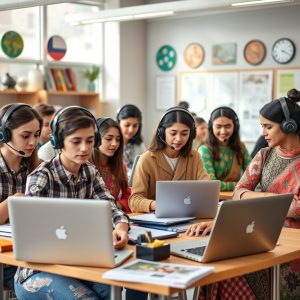
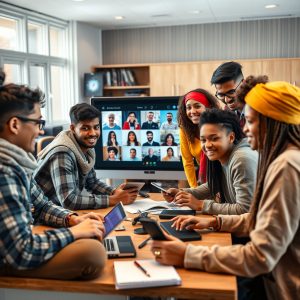
Hybrid learning has emerged as a cornerstone of modern education, blending the flexibility of virtual platforms with the depth of in-person experiences. For students participating in international scholarships or student exchange programs, this format offers the best of both worlds. Virtual components allow learners to engage with coursework, collaborate on projects, and connect with peers across continents without the constraints of geography. Meanwhile, in-person residencies or exchange semesters provide the invaluable opportunity for cultural immersion, hands-on research, and face-to-face mentorship.
This model is particularly transformative for STEM disciplines, where practical application and interdisciplinary collaboration are essential. Imagine a student in Nairobi collaborating on a renewable energy project with peers in Berlin, all while attending lectures from professors in Tokyo—all made possible through a hybrid learning framework. The ability to seamlessly transition between digital and physical learning environments not only enhances academic outcomes but also fosters adaptability, a skill increasingly vital in today’s fast-paced global economy.
Fully Funded Scholarships: The Catalyst for Inclusive Academic Mobility
While hybrid learning opens doors, fully funded scholarships ensure that those doors are accessible to all, regardless of financial background. Programs like the Global Undergraduate Exchange, Fulbright, and DAAD scholarships are not just financial aid packages—they are lifelines that empower students from underrepresented regions to pursue higher education on a global stage. These scholarships often cover tuition, living expenses, travel costs, and even language training, removing the economic barriers that have historically limited academic mobility.
The impact of these scholarships extends far beyond individual success. By enabling students from diverse backgrounds to participate in international education, they enrich the academic ecosystem with varied perspectives, driving innovation and fostering cross-cultural understanding. For instance, a student from a rural community in India who secures a merit-based scholarship to study artificial intelligence in Canada brings a unique viewpoint to the classroom, one that might inspire new approaches to solving global challenges like climate change or healthcare disparities.
Cultural Immersion: The Hidden Curriculum of Global Education
One of the most profound benefits of studying abroad—whether through hybrid programs or traditional exchange—is the opportunity for cultural immersion. Living, studying, and working alongside peers from different backgrounds challenges students to step outside their comfort zones, question their assumptions, and develop a deeper appreciation for diversity. This experience is not just about acquiring language skills or adapting to new social norms; it’s about cultivating empathy, resilience, and a global mindset—qualities that are indispensable in today’s interconnected workforce.
For STEM students, cultural immersion can also spark creativity and innovation. Exposure to different educational systems, research methodologies, and problem-solving approaches can lead to breakthroughs that might not have been possible within the confines of a single cultural or academic framework. For example, a biomedical engineering student from Brazil studying in Sweden might combine traditional herbal medicine practices from their home country with cutting-edge biotechnology, leading to novel solutions in drug development or public health.
Blended Education Programs: The Future of Sustainable Learning
As the demand for global education continues to grow, so does the need for sustainable models that can accommodate large numbers of students without compromising quality. Blended education programs—those that combine online learning with periodic in-person intensives—offer a scalable solution. These programs reduce the carbon footprint associated with traditional study abroad by minimizing travel, while still providing the benefits of face-to-face interaction and hands-on learning.
Moreover, blended programs are often more cost-effective, making them an attractive option for institutions and students alike. For universities, they allow for the expansion of international partnerships without the logistical challenges of hosting large numbers of exchange students. For students, they provide access to world-class education without the financial burden of relocating for an entire degree program. This model is particularly well-suited for postgraduate funding, where professionals seeking to advance their careers can balance work, study, and personal commitments.
Career Development: Bridging Education and Opportunity
The ultimate goal of academic mobility is not just to earn a degree but to open doors to meaningful career opportunities. Hybrid learning and fully funded scholarships play a pivotal role in this transition by equipping students with the skills, networks, and experiences needed to thrive in a global job market. Many scholarship programs include internships, research opportunities, or industry partnerships, providing students with real-world experience and professional connections that can jumpstart their careers.
For example, a student participating in a virtual student exchange program might collaborate with a multinational corporation on a sustainability project, gaining exposure to industry best practices and building a portfolio of work that sets them apart in the job market. Similarly, a postgraduate student funded by a higher education grant might conduct research that leads to a patent or a startup, turning academic pursuits into entrepreneurial ventures. These experiences not only enhance employability but also empower students to become agents of change in their fields.
The Role of Cross-Cultural Communication in Shaping Global Leaders
At the intersection of hybrid learning and international scholarships lies a critical skill: cross-cultural communication. The ability to navigate cultural differences, build trust across borders, and collaborate effectively with diverse teams is no longer a soft skill—it’s a necessity. Students who develop these competencies are better equipped to lead multinational teams, negotiate international partnerships, and drive innovation in global industries.
Programs that emphasize cross-cultural communication often include language training, intercultural workshops, and team-based projects that require students to engage with peers from different backgrounds. These experiences not only enhance academic learning but also prepare students for the complexities of working in a globalized world. For STEM students, this skill set is particularly valuable, as scientific and technological advancements increasingly require collaboration across disciplines, cultures, and geographies.
The fusion of hybrid learning and fully funded scholarships is more than a trend—it’s a movement that is democratizing access to global education and redefining the possibilities for students worldwide. By breaking down financial, geographical, and cultural barriers, these models are not only shaping the future of academic mobility but also cultivating a generation of leaders who are equipped to tackle the world’s most pressing challenges. As technology continues to evolve and the demand for global talent grows, the opportunities for cross-cultural learning and innovation will only expand, creating a ripple effect that transcends borders and transforms lives. The question is no longer whether students can afford to study abroad, but how far they can go when the world becomes their classroom.