Experiential Knowledge Acquisition: How Real-World Application Transforms Student-Centric Pedagogy

Education is no longer confined to the four walls of a classroom or the static pages of a textbook. The shift toward student-centric pedagogy has redefined how learners engage with content, moving beyond passive absorption to active participation. At the heart of this transformation lies experiential knowledge acquisition—a dynamic approach that immerses students in real-world scenarios, fostering deeper understanding and long-lasting competency. By integrating real-world application into learning, educators are not just teaching concepts; they are cultivating skills that prepare students for the complexities of modern life.
The Power of Doing: Why Experience Matters in Learning
Traditional education often prioritizes theoretical knowledge, leaving students to bridge the gap between abstract concepts and practical use on their own. However, research in cognitive science and educational psychology consistently shows that learning is most effective when it is interactive and contextual. Experiential knowledge acquisition leverages this principle by placing learners in situations where they must apply what they’ve learned to solve problems, make decisions, and reflect on outcomes.
For example, a biology student might memorize the stages of photosynthesis from a textbook, but their understanding deepens when they design an experiment to measure plant growth under different light conditions. Similarly, a business student studying marketing strategies gains far more insight by developing a campaign for a local nonprofit than by analyzing case studies in isolation. These experiences do more than reinforce knowledge—they build confidence, adaptability, and critical thinking skills that are essential in today’s fast-paced world.
From Theory to Practice: The Role of Project-Based Learning
Project-based learning (PBL) is one of the most effective frameworks for experiential knowledge acquisition. Unlike traditional assignments, PBL tasks students with tackling open-ended challenges that mirror real-world problems. Whether it’s designing a sustainable community garden, creating a mobile app to address a social issue, or developing a business plan for a startup, these projects require learners to synthesize information, collaborate with peers, and iterate based on feedback.
The benefits of PBL extend beyond academic achievement. Students develop soft skills such as communication, teamwork, and time management—qualities that are highly valued in the workplace. Moreover, PBL fosters a sense of ownership over learning, as students see the tangible impact of their efforts. When a group of high school students successfully lobbies their city council to implement a recycling program they designed, they experience firsthand the power of real-world application in driving change.
Scaffolding Complexity: Guiding Learners Through Challenges
While experiential learning is powerful, it can also be overwhelming if not properly structured. This is where scaffolding complex concepts becomes essential. Scaffolding involves breaking down tasks into manageable steps and providing support—such as guided questions, templates, or mentorship—until students can tackle challenges independently. This approach ensures that learners are neither under-challenged nor overwhelmed, striking a balance that promotes growth.
For instance, a teacher introducing coding might start with a simple, step-by-step tutorial before gradually increasing complexity. As students gain confidence, the scaffolding is removed, allowing them to experiment and troubleshoot on their own. This method not only builds technical skills but also nurtures resilience and problem-solving abilities. By the time students reach the final project—a fully functional website or game—they’ve internalized the process of learning through doing.
Collaborative Problem Solving: Learning Through Shared Experiences
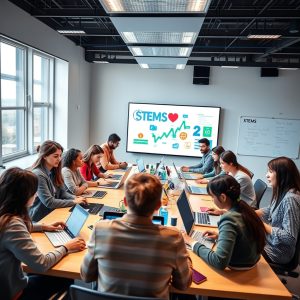
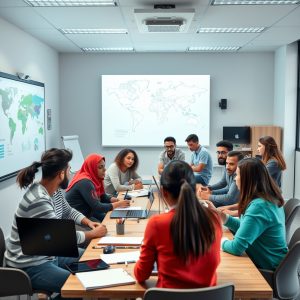
No skill is developed in isolation. Collaborative problem solving is a cornerstone of experiential knowledge acquisition, as it mirrors the team-based environments students will encounter in their careers. When learners work together to address a challenge—whether it’s designing a prototype, conducting research, or debating ethical dilemmas—they benefit from diverse perspectives and collective intelligence.
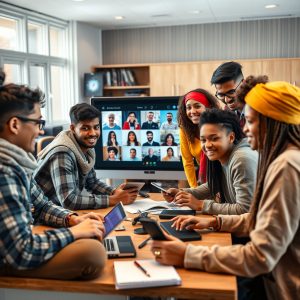
Consider a scenario where students are tasked with creating a podcast on climate change. One student might excel at research, another at scriptwriting, and another at audio editing. Through collaboration, they not only produce a high-quality final product but also learn from each other’s strengths and weaknesses. This process fosters social-emotional learning (SEL), as students navigate interpersonal dynamics, practice empathy, and develop leadership skills. In an era where remote work and global teams are the norm, these competencies are invaluable.
Digital Literacy Integration: Preparing Students for a Tech-Driven World
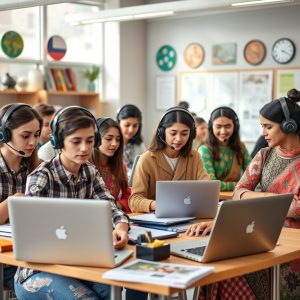
Incorporating digital literacy integration into experiential learning ensures that students are not only consumers of technology but also creators and critical thinkers. From using data analytics tools to interpret research findings to leveraging virtual reality (VR) for immersive simulations, technology enhances the depth and breadth of experiential opportunities.
For example, medical students can practice surgical techniques in VR environments before stepping into an operating room, while history students can explore ancient civilizations through augmented reality (AR) tours. These tools make abstract concepts tangible and provide safe spaces for experimentation. Moreover, digital literacy prepares students for the future of work, where proficiency with technology is often a prerequisite for success.
Reflective Learning: The Key to Lasting Competency
One of the most overlooked yet critical components of experiential knowledge acquisition is reflection. Without intentional reflection, experiences risk becoming mere activities rather than opportunities for growth. Reflective learning practice encourages students to analyze their actions, identify what worked and what didn’t, and consider how they can apply these insights in the future.
Journaling, group discussions, and portfolio assessments are common methods for fostering reflection. For instance, after completing a group project, students might write about their contributions, challenges they faced, and how they would approach similar tasks differently next time. This process solidifies learning, promotes metacognition, and helps students develop a growth mindset—an essential trait for lifelong learning.
As education continues to evolve, the emphasis on experiential knowledge acquisition will only grow stronger. By grounding learning in real-world application, educators empower students to become not just passive recipients of information, but active participants in their own development. Whether through project-based tasks, collaborative problem-solving, or digital exploration, these experiences shape learners who are adaptable, competent, and ready to thrive in an ever-changing world. The future of education isn’t about what students know—it’s about what they can do with what they know, and how they grow from every challenge they encounter.